GS1 Sunrise 2027 · Field Guide
The Big Picture

The future of packaging is now.

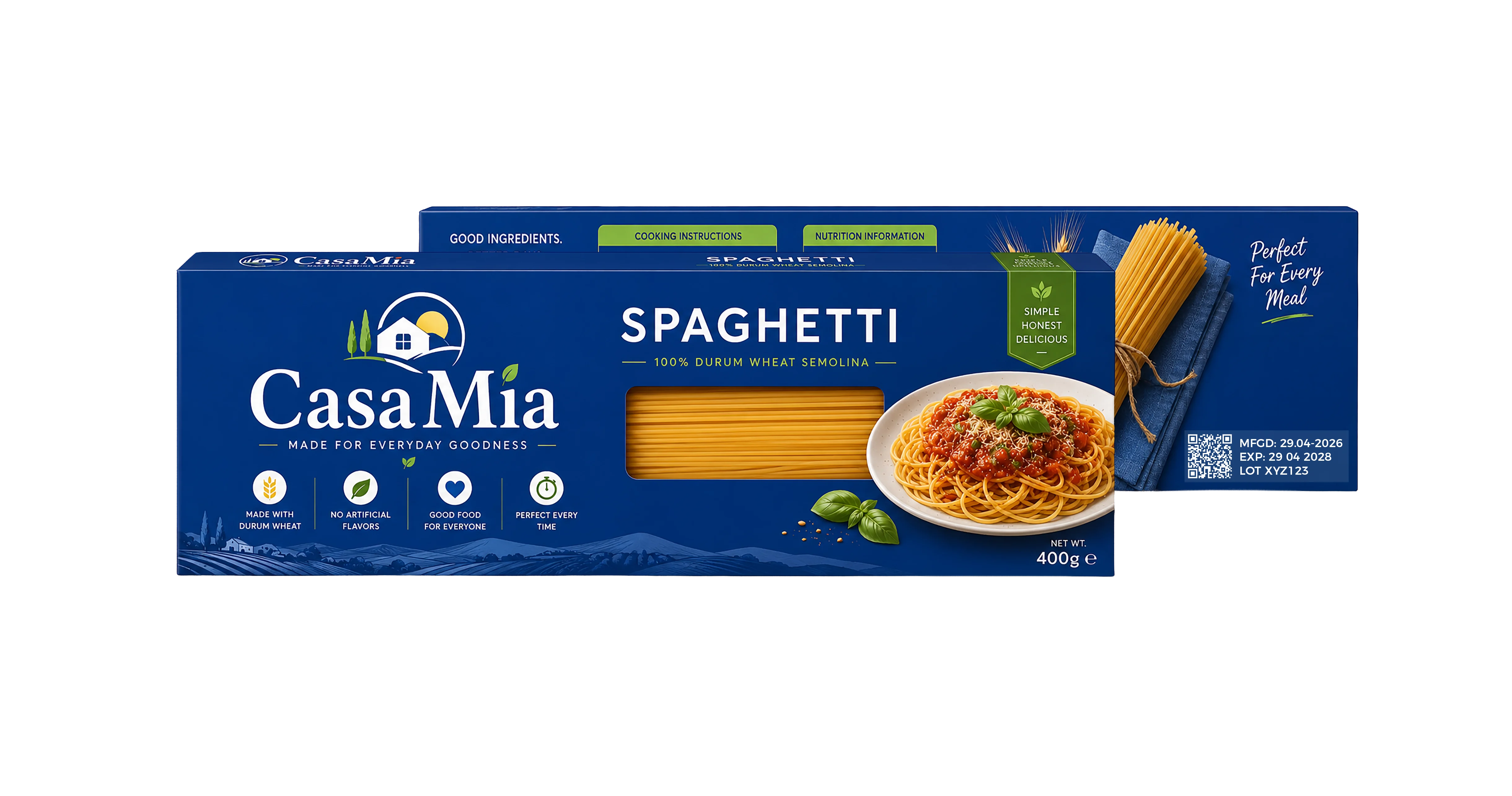
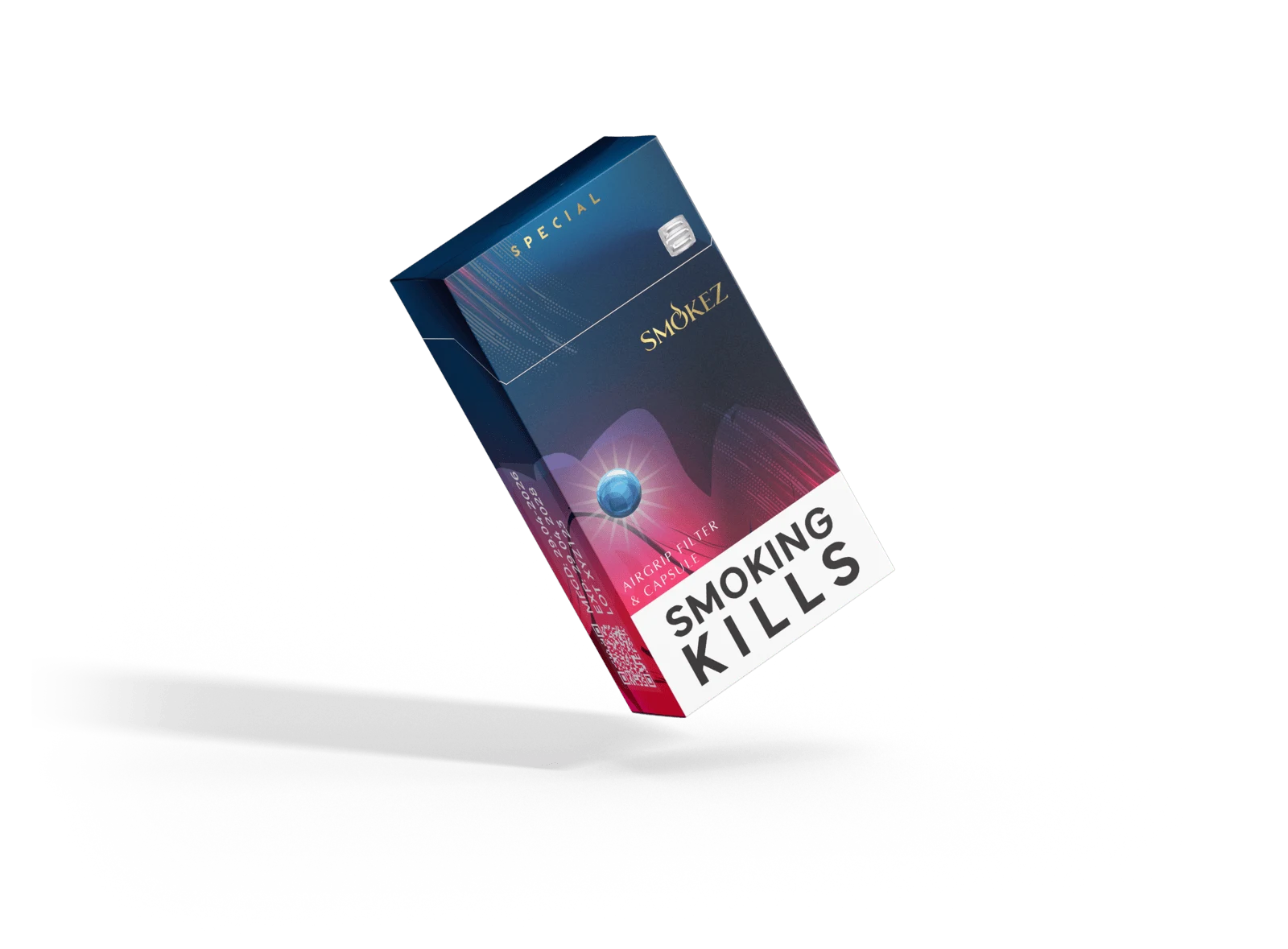
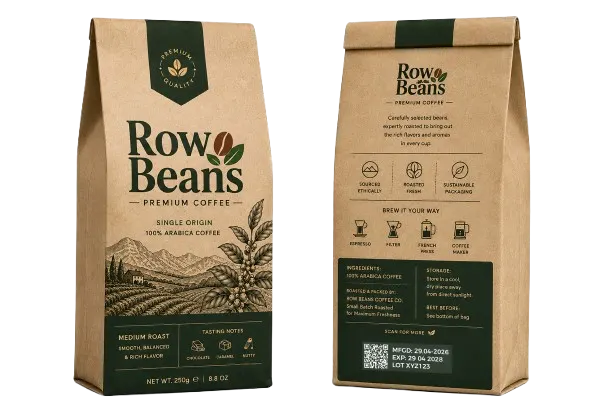
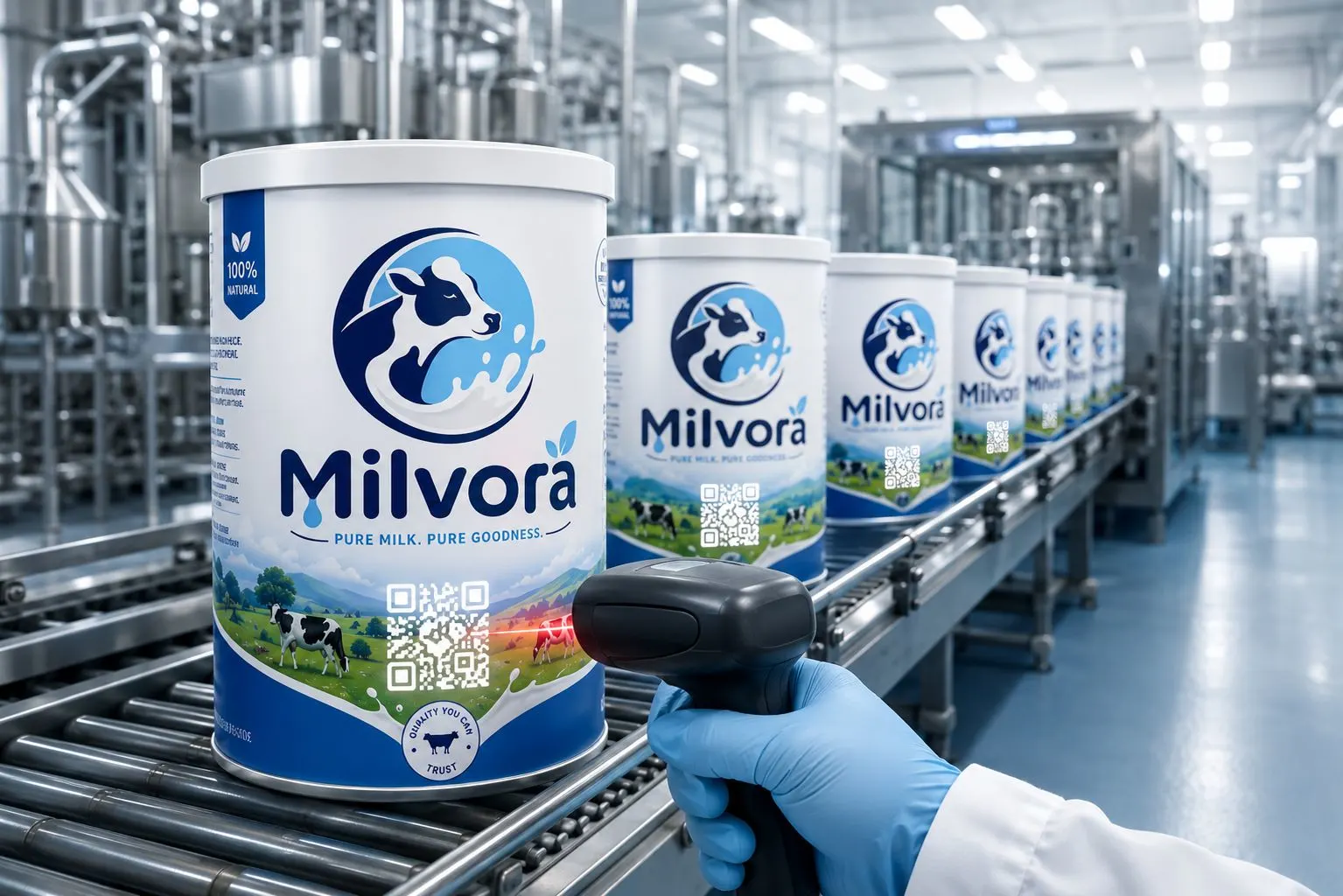
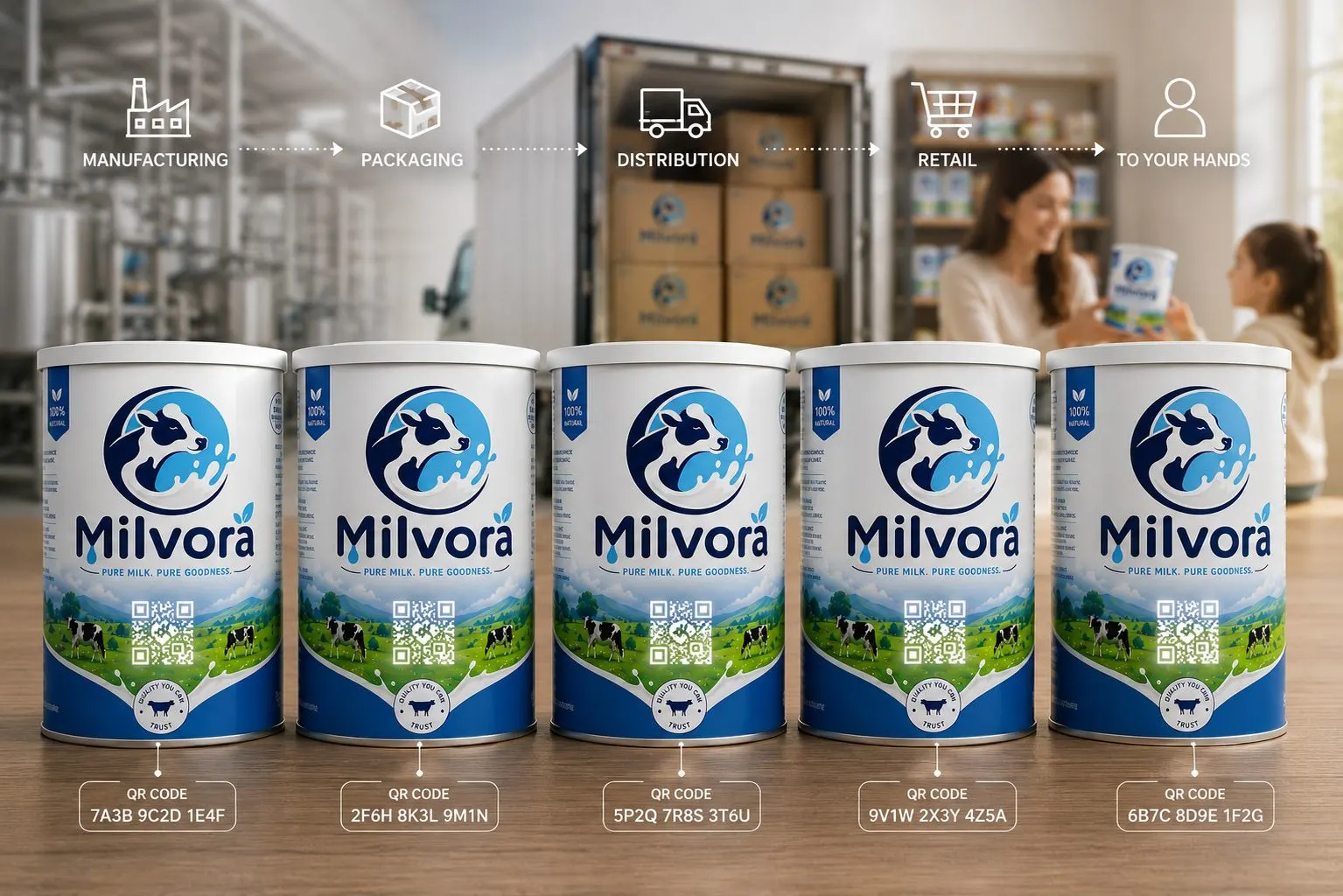
By the end of 2027, every product worldwide shifts from static 1D barcodes to dynamic 2D QR codes. But here's what most overviews miss: every code is unique, and every code must be marked on the filling line in real time. Total Brand Security's laser-reactive primer makes that practical at scale — permanently, on any substrate, without waste.

Explore how it works
2027Global sunrise deadline
1:1Code per package
0Pre-printed QRs
— Until 2027
1D Barcode (EAN/UPC)
EAN/UPC barcode example
Static. Pre-printed. Identical across every unit. Carries a price and a product ID — nothing more.
— From 2027
2D GS1 Digital Link QR
GS1 Sunrise 2027 demo QR code ↑ Scan or tap — live GS1 demo
Dynamic. Coded on-demand on the packaging line. Every package carries unique data — batch, dates, serial — linked to your brand's database.
The industry shift

Coding has reached a turning point.

Historically, coding was treated as an afterthought in the packaging and filling industry — a necessary step to meet basic requirements like batch numbers and expiry dates. That era is ending. Three converging pressures are now reshaping the entire coding process, and the technologies most converters and brand owners rely on today are starting to struggle.

01 · Coding requirements
From static identity to per-pack data

Initiatives such as GS1 Sunrise 2027 require individual, machine-readable codes on every pack — applied during packaging or filling, not pre-printed in artwork. This eliminates, or significantly reduces, the suitability of a wide range of existing coding technologies.

02 · Packaging materials
Reduce, reuse, recycle

New substrates engineered for recyclability and material reduction — mono-material films, lighter-gauge boards, recycled-content kraft, alternative liners — limit the use of traditional coding processes that depended on legacy substrate properties to mark cleanly.

03 · Sustainability rules
Restrictions on inks, ribbons, waste

Tightening regulations on solvents, hazardous substances, and the cost of waste streams are making ink-based and ribbon-based coding increasingly difficult and expensive to manage at the filling line.

The TBS answer

Laser coding made independent of the substrate.

The TBS laser-reactive primer is built on laser coding — one of the most reliable technologies in the industry — and it works with every laser type already used in packaging and filling. Existing investments in CO₂ and fibre laser hardware are protected.

Traditional laser coding depends entirely on the properties of the substrate, which is its single biggest limitation. The TBS primer removes that dependency. A standardised primer layer is applied during the packaging printing process, giving the laser a consistent, optimised surface to mark on — regardless of what's underneath.

The result is a sustainable, integrated coding solution that lives within the standard converter workflow. No consumables at the filling line. No ribbon waste. No ink-stock management. No hazardous materials at the point of fill. Just a primer-coated substrate, a standard laser, and a permanent code marked at production speed.

The Production-Line Reality

Why this cannot be pre-printed.

The GS1 Digital Link contains data that doesn't exist until the pack reaches the packaging line. Lot numbers, production dates, expiry windows, serial numbers — all of these are decided when the line runs, not when the artwork is approved.

01

Variable per package

Each unit shipped carries a unique combination of batch, production date, and expiry. No two adjacent packages can share the same QR.

02

Unknown at print time

Brand owners and converters approve artwork weeks or months ahead. Production schedules and shelf-life data are only fixed on the day of fill.

03

Coded on the line

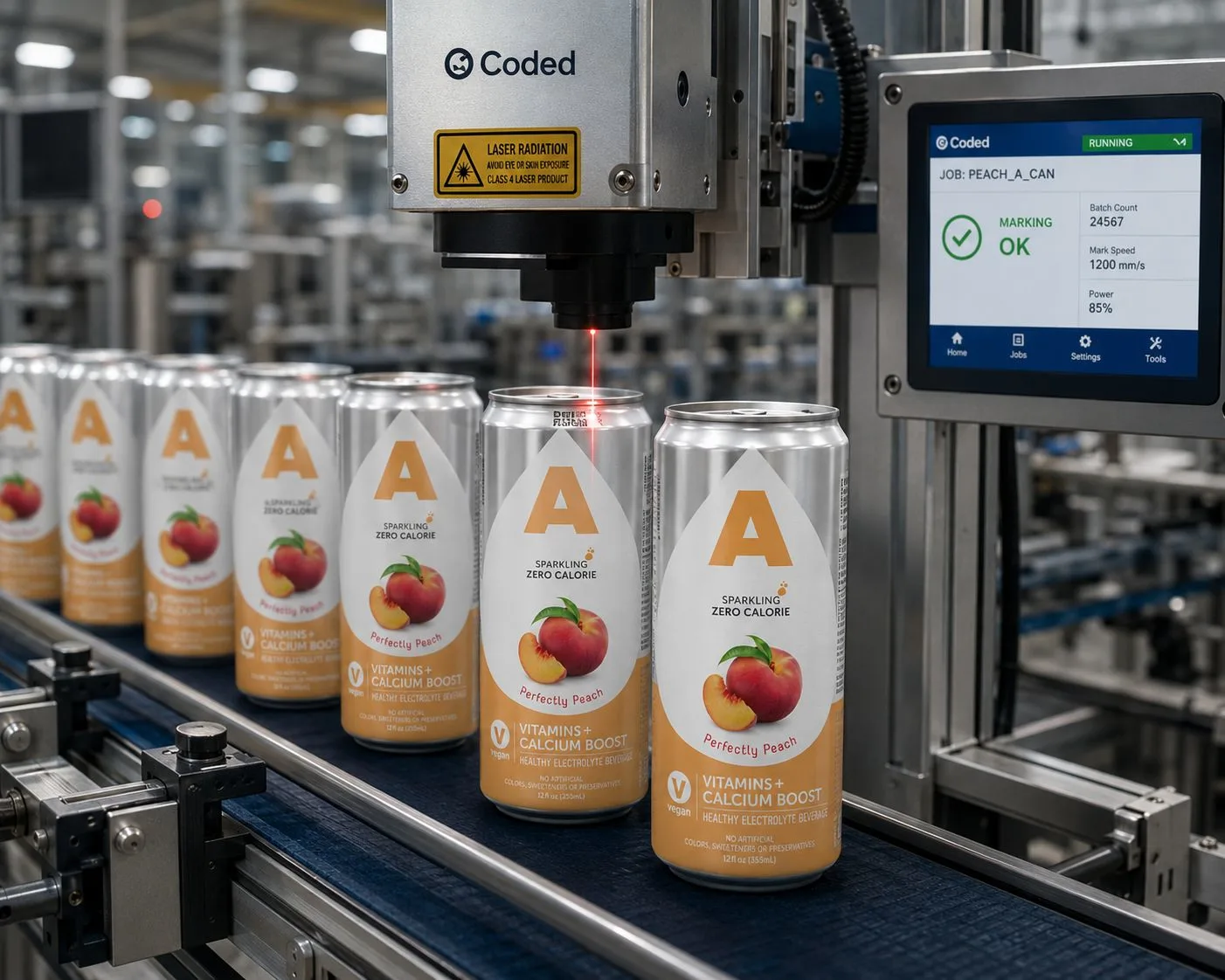
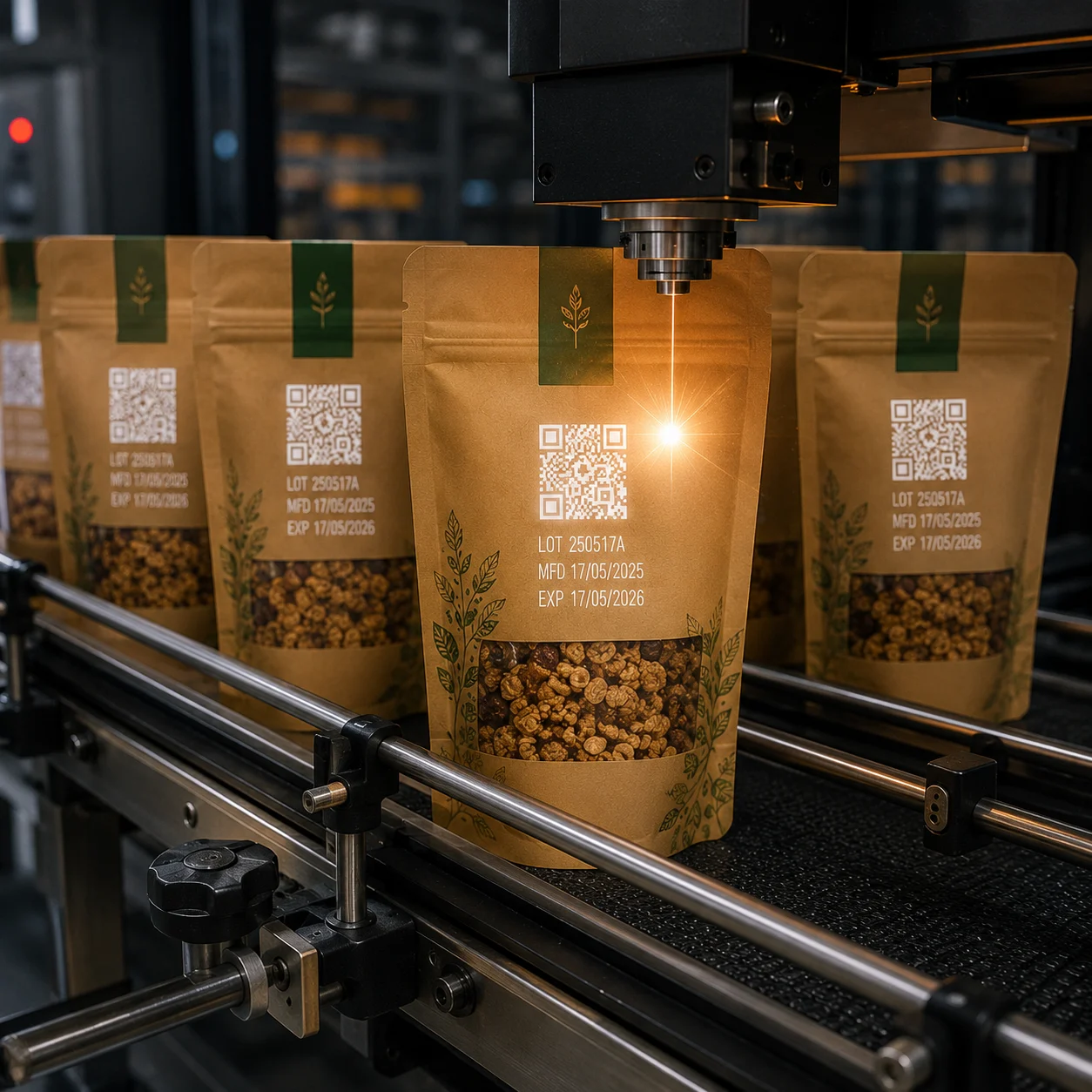
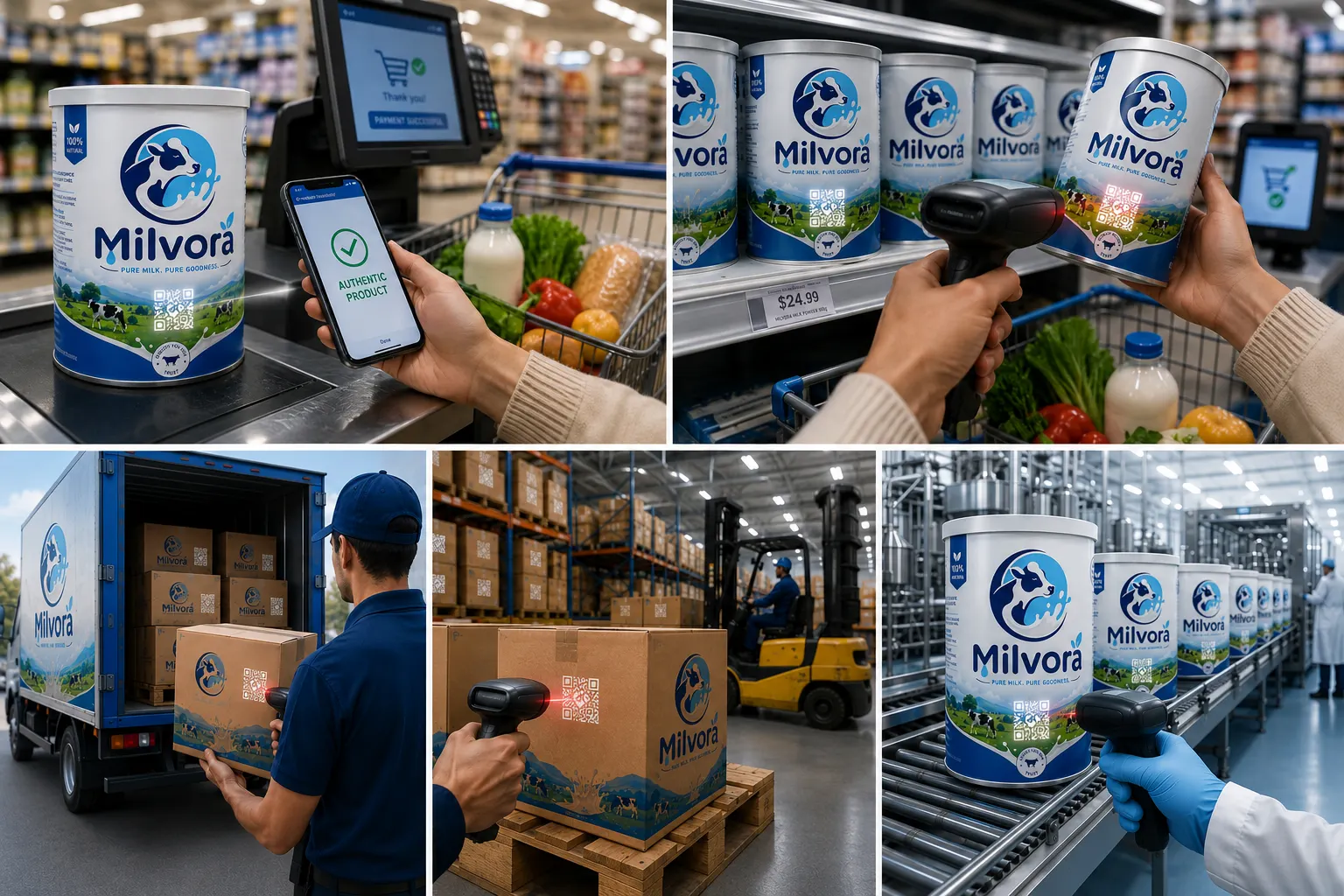
Marking happens at the brand owner's filling line, in real time, at full production speed — typically with a CO₂ or fibre laser integrated into the conveyor.

The implication: every primary and secondary pack on a 2027-compliant line needs a surface that can accept a permanent, high-contrast, machine-readable mark — applied on-demand, on the line, in milliseconds. That single requirement reshapes the entire packaging stack.
Why the Industry is Moving

Four reasons the QR replaces the EAN.

At checkout the till still reads a price — exactly as today. But behind that single scan, a 2D QR carries an entire data layer that the 1D barcode cannot.

01

Enhanced Traceability

Batch, production date, expiry and serial travel with every unit — recall windows narrow from pallets to packages.

02

Direct Consumer Engagement

The same code a till scans is also the URL a phone opens — sourcing, recipes, sustainability, manuals, promotions.

03

Operational Efficiency

Expired stock blocks at the till. Inventory reads at the unit level. Returns, recalls and reorders all run on richer data.

04

Safety & Authenticity

Allergen flags, certifications, and tamper indicators are surfaced at the moment of scan, not buried in fine print.

How It Works

One code. Different audiences.

A GS1 Digital Link QR is not a static barcode — it's a smart URL. The same code redirects a consumer's phone, a supermarket POS scanner, and a logistics partner's hand-held to entirely different destinations.

i

Scan

A phone, till, or scanner reads the QR on the package.

ii

Resolve

The encoded URL is sent to a brand-controlled resolver server.

iii

Identify

The resolver detects who is scanning — consumer phone, retail POS, B2B scanner.

iv

Deliver

The right destination is served: pricing, product page, recall data, traceability log.

Anatomy of a GS1 Digital Link

Three parts. One QR. Marked per pack.

A GS1 Digital Link URL is built from three conceptual blocks: the brand-controlled domain, the product identifier (GTIN/EAN), and the per-pack variable data. The first two stay constant — but because the third changes with every pack, the QR code that encodes the whole URL must itself be unique on every pack. The entire QR has to be marked on the line, in real time, at the point of fill.

01 The Resolver
Fixed brand domain
https://id.brand.com

Where the QR scan resolves to. Configured once by the brand (or via a GS1 / Digimarc resolver) and stays the same across every product the brand owns.

Set once · brand-controlled
02 The Product ID
GTIN / EAN
/01/09501101530004

The same Global Trade Item Number that's on the existing 1D barcode today. Identifies the SKU. The GTIN itself is stable for that product — but it lives inside a QR that also carries variable data, so it must be encoded at fill, not pre-printed.

Per SKU · stable for the product
03 The Variable Data
Lot, date, expiry, serial…
/11/260426/10/ABC12345/17/271231

Production date, batch, expiry, serial, weight — the data already coded as human-readable text by inkjet or thermal ribbon today. Different on every single pack.

Per pack · must be coded on-line
— Assembled into a single URL
https://id.brand.com/01/09501101530004/11/260426/10/ABC12345/17/271231
What this means for production: A QR code is a single, indivisible visual encoding — you can't pre-print part of it and add the rest later. The QR has to be marked as one whole unit, including whatever variable data is in it. The simplest case is per-batch coding (lot, date, expiry) where every pack in that batch carries an identical QR. The most demanding case is full per-pack serialisation, where every QR is unique. Either way, because the variable data changes whenever the batch, date, or serial changes, on-line coding at fill is the only realistic production model. That's a fundamental break from the current model where a 1D EAN barcode — carrying only the GTIN, with no variable data — can be pre-printed in artwork. The TBS laser-reactive primer is engineered for exactly this on-line variable-coding role, at full production speed, across the security tiers brands need.
Linking the physical with the digital

Every pack becomes a verifiable digital identity.

A QR code on a pack is more than a compliance mark — it's the bridge between a physical product and the brand's digital trust layer. The data it carries, the database it talks to, and the security built into the encoding all sit under the brand's control. That's how counterfeiting becomes harder to scale, recalls become surgical instead of broad, and consumer trust becomes a measurable asset.

Tier 01 · Public verification
Brand-controlled domain
For consumers, retail staff, customs

The URL prefix — id.brand.com — is owned by the brand. Only the brand can publish a QR that resolves there. A counterfeiter can copy the visual pattern but cannot take ownership of the domain.

How it's verified: any QR scanner. URL prefix mismatch is the first signal of a fake.
Tier 02 · Cryptographic security
Covert keys in the variable data
For pharma, infant nutrition, high-value goods

Brand-controlled cryptographic keys can be embedded into the QR's variable data — invisible to the consumer, validated server-side. A duplicated identifier is flagged the moment the second scan hits the database.

How it's verified: the brand's resolver and database. Cloned QRs trigger automatic alerts.
Tier 03 · Forensic authentication
Forced-error markers
For investigators, regulators, court-grade evidence

The laser can introduce controlled, deliberate errors into the QR encoding — invisible to the eye, undetectable by standard scanners, but recorded in the brand's secure database. Each pack carries a unique forensic signature.

How it's verified: a secure brand-owned authentication app. In court, the genuine QR's recorded error pattern can be compared directly against a suspect product.
2014
— A world first

In August 2014, Total Brand Security was the first company in the world to deploy variable QR codes on the bottom of primary infant formula cans — at the time using laser ablation as the marking method.

Founded in 2003, TBS has spent the decade since that 2014 deployment investing in the development of the non-ablative laser-reactive primer — engineered specifically to overcome the debris, substrate damage, and extraction overhead that ablation imposes. The primer technology is now market-ready, validated at industrial scale across Germany, the UK, and Malaysia, and arriving at exactly the moment GS1 Sunrise 2027 makes variable QR coding a global mandate.

The infant formula deployment continues to operate today. Brand security is not a Sunrise 2027 add-on for TBS — it is the company's foundational expertise, built over more than two decades.

See It Coded

What your filling line will actually mark.

Adjust the production data below to see how the GS1 Digital Link QR changes per package. In real production, this exact data flow runs from your ERP into a laser controller, marking each unit in milliseconds as it passes the coding station.

Important: in real production, this code is never pre-printed. The QR you see here is what your laser would mark on each individual package, at the moment of fill, based on that batch's actual data.

01 Line Data Inputs

AI 01
AI 11
AI 10
AI 17

02 Marked at Pack-Out

Scan with your phone camera
Encoded URI
Plus human-readable, marked alongside
The Road to 2027

The transition is a multi-year journey.

Most brands are now moving from education and pilot lines into broader rollout, with full retail POS scanning the deadline. Early movers lock in supplier relationships, line integration patterns, and consumer-facing data infrastructure ahead of the rush.

Education & Piloting 2022 — 2024
Broader Adoption & Dual Labelling 2024 — 2026
Mandatory POS Scanning 2027 — 2028
2022202320242025202620272028
Pilot phase
Adoption / dual labelling
Mandatory POS scanning

Key challenges

System upgrades. New coding equipment, scanners, and data plumbing capable of handling unique-per-pack variable data.
Master data discipline. ERP and WMS records must be clean, governed, and synchronised before a single QR is generated.
Packaging redesign. Existing artwork must accommodate a 2D code without compromising the brand — and must accept a high-contrast, machine-readable mark.
Partner alignment. Converters, brand owners, retailers and laser OEMs all need to move in step for end-to-end interoperability.

What early movers are doing

Auditing first. Mapping every line, every SKU, every printer and scanner against the 2027 spec — before buying anything.
Running pilots. Choosing one or two SKUs, one filling line, and one retail partner — proving the loop end-to-end at small scale.
Locking in primer partners. Securing pre-coated packaging supply now, while capacity is available and pricing is favourable.
Treating it as upside. Using the mandate as the trigger to upgrade traceability, recall capability, and direct-to-consumer data — not just compliance.
The Solution

The missing piece: laser-reactive primer.

The biggest challenge most brands face — "how do I redesign my packaging to accommodate a 2D code without destroying the brand?" — is exactly the problem Total Brand Security's laser-reactive primer was built to solve.

Stage 01 — Converting

Primer integrated at print

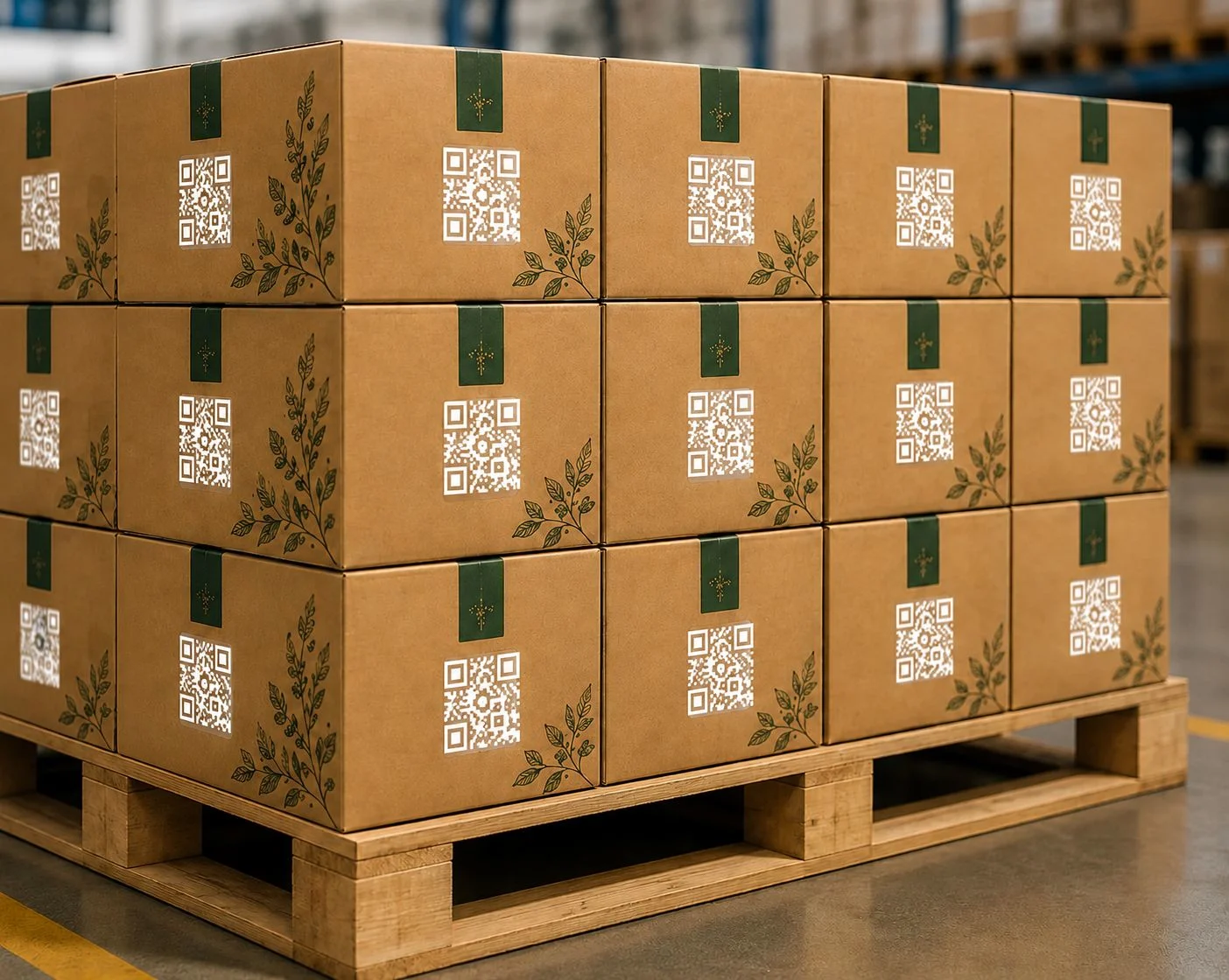
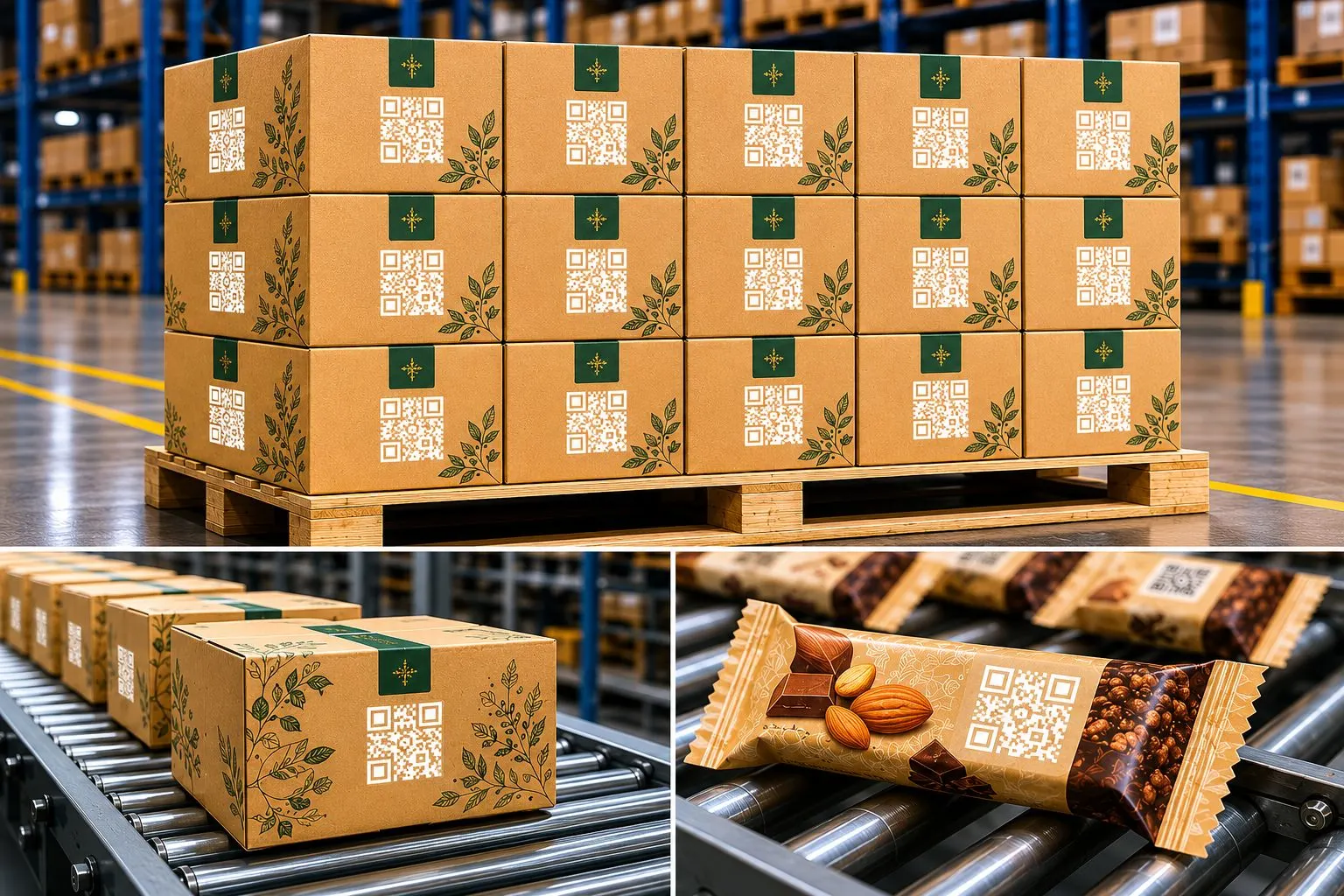
The clear laser-reactive primer is applied during the converter's existing print pass. For corrugated, it can cover the kraft surface. For branded secondary packs, it sits as a designated patch inside the printed artwork — no impact on the brand design.

Partner: packaging converter
Stage 02 — Delivery

Laser-ready stock arrives

The brand owner receives finished packaging that looks identical to a conventional run — except every pack is now ready to accept a permanent, high-contrast laser mark in the patch area, with no extra hardware on their side beyond the laser itself.

Partner: brand owner / co-packer
Stage 03 — Filling line

One pass, all variable data

On the packaging line, a CO₂ or fibre laser triggers a refractive index change in the primer — clear to bright white. In a single pass, it marks the GS1 Digital Link QR plus lot, production date, expiry — every variable, on every package, at full line speed.

Partner: line integrator / laser OEM
Why laser, and why this laser

Today's coding systems can't meet 2027 demands.

Variable data on packaging today is mostly human-readable expiry, lot, and date codes — printed by inkjet, thermal inkjet, thermal transfer ribbon, or applied as pre-printed labels. These technologies were built for short, low-density alphanumeric prints. A 12×12 mm GS1 Digital Link QR carrying batch, expiry, and product data demands resolution and throughput that legacy systems simply weren't designed for.

— Incumbent · today
Continuous inkjet (CIJ HR)
The dominant high-speed coder for expiry and lot codes on FMCG lines. Solvent-based, non-contact, fast.
Cannot produce a 12×12 mm QR at production resolution. Drop-size and matrix limits put a Sunrise-grade QR out of reach. Solvent-dependent, with constant printhead maintenance.
Adhesion risk on plastic films. Solvent inks struggle to bond to BOPP, PE, and PET — codes can rub or smear off in handling.
QR not achievable
— Incumbent · today
Thermal inkjet (TIJ)
Higher-resolution drop-on-demand inkjet (300×300 dpi). Used where readable codes or graphics are needed.
QR is technically possible — but at high consumable cost. Ink usage, cartridge changes, and substrate compatibility limit it to slower or shorter runs.
Substrate-dependent adhesion. Performance varies sharply across plastic films — codes can scuff off without specialised primers or pre-treatment.
Consumable-heavy
— Incumbent · today
Thermal transfer ribbon (TTO)
Standard for printing dates and lot codes onto flexible films and primary labels. Mechanical, ribbon-fed.
Mechanical printheads, ribbon consumables, contact wear. At full line speed, multiple units run in parallel — efficiency, ribbon waste, and downtime stack up.
Wax/resin codes sit on the surface. Vulnerable to scuffing, scratching, and lift-off in cold-chain, frozen, or high-handling environments.
Parallel units needed
— Incumbent · today
Pre-printed labels (LPA)
Label print-and-apply systems — pre-printed adhesive labels applied to the pack on-line. Used heavily on outers and secondary packs.
Slow, mechanical, waste-heavy. To match high-speed lines, multiple labellers run in parallel. Liner waste, applicator jams, and stop-start downtime cap real-world throughput.
Adhesive failures in cold or wet conditions. Labels lift, peel, or detach entirely — a costly QA and traceability risk.
Multiple units needed

That leaves laser as the only technology delivering QR-grade resolution at full production-line speed, on a single unit, with no consumables.

And within laser, the choice is between ablative coding (debris, fume extraction, substrate damage) and the TBS non-ablative laser-reactive primer.
Total cost of ownership
Want a tailored breakdown for your line?

TBS has detailed comparative TCO models — consumables, downtime, parallel-unit requirements, efficiency loss — for every incumbent technology versus laser-reactive primer. Brands and converters can request a confidential breakdown for their specific production environment.

The clean-line advantage
95%

fewer foreign bodies and less dust than ablative laser coding.

Conventional laser coding is an ablative process — it physically burns away ink or substrate to leave a contrasting mark. That generates microscopic and macroscopic debris, demands aggressive fume extraction, and risks damaging the barrier properties of films and foils.

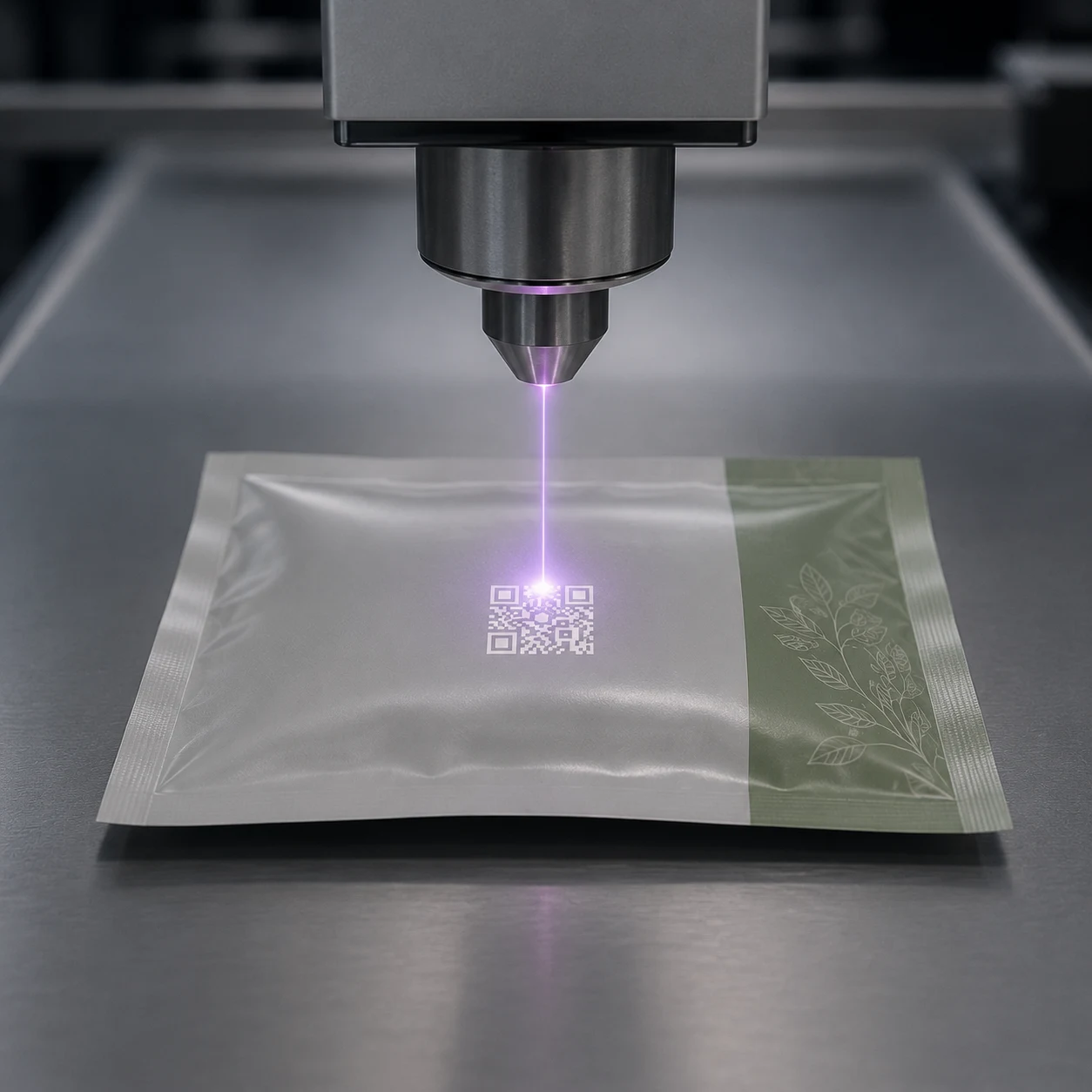
The TBS laser-reactive primer is non-ablative. The laser triggers a refractive index change in the primer itself — clear to bright white — without removing or damaging any material. Empirical filter-paper measurements during industrial trials confirm the difference.

  • 0.012 g of debris per 1,000 codes vs 0.24 g for laser ablation — a 20:1 cleanliness ratio.
  • No substrate damage. Films, foils, and barrier layers stay intact — no microfractures, no burn marks, no compromised seal integrity.
  • Reduced extraction overhead. Fume and dust extraction systems run at baseline regulatory minimums — no constant filter changes mid-shift.
Source: TBS production-trial filter-paper measurements
LASER PROTECTIVE LAYER PRIMER LASER-MARKED SUBSTRATE CODE SEALED INSIDE LAMINATE STRUCTURE
Permanent by design

The code lives below the surface — it cannot scuff, smear, or rub off.

The TBS laser-reactive primer is typically reverse-printed onto a clear film, or protected by an over-varnish applied on top — depending on the converter's print process and substrate. Either way, when the laser activates the colour-change, the white code forms inside the laminate structure, physically sealed beneath the protective layer.

That single architectural decision solves the durability problem that plagues every incumbent printing technology: scuffing in transit, smearing in cold-chain, lift-off on plastic films, peel failures on adhesive labels. Once the laser has fired, the code is locked in the pack for life — through distribution, refrigeration, shopper handling, and shelf wear.

Barrier integrity preserved

Low-power, non-aggressive marking — your oxygen, moisture, and aroma barriers stay intact.

Because the colour change is a refractive index shift within the primer rather than burning material away, the laser power required is significantly lower than what ablative coding uses today. The marking does not perforate, weaken, or thermally stress multilayer or mono-material films — keeping the protective barrier function of your packaging fully intact.

Oxygen Transmission

No measurable degradation of OTR performance

Water Vapour Transmission

WVTR maintained — moisture barrier untouched

Aroma & Flavour

No taint, no migration into the product

Barrier & permeation testing
We'll test on your film. With your numbers.

TBS works with brands and converters to validate the primer against your specific film construction — running OTR, WVTR, aroma/flavour, and any other permeation tests your QA team relies on. Proof that variable data marking won't compromise shelf life, freshness, or product integrity.

A primer for every press

Compatible with every major print process on the line today.

TBS has developed a full family of laser-reactive primer formulations — engineered to slot into whichever ink chemistry your converter already runs at scale. No new equipment, no process disruption, no learning curve.

Solvent-based

Flexo and gravure lines running solvent inks at full FMCG production speed.

UV-cured

UV flexo, UV offset, and UV inkjet lines — high-resolution, instant cure.

Water-based

Low-VOC water-based flexo for food, dairy, and sustainability-led production.

Conventional

Conventional offset and flexo presses already running mass-production print volumes.

What this delivers across the line
No label applicators.Eliminates the labeller, its downtime, and operator overhead.
No liner waste.No adhesive backing, no plastic liners hitting landfill.
No SKU proliferation.One pre-coated stock SKU. Variable data added at fill.
On-demand coding.Every code reflects real-time production data.
Permanent, high-contrast.POS-readable and consumer-readable — first scan, every time.
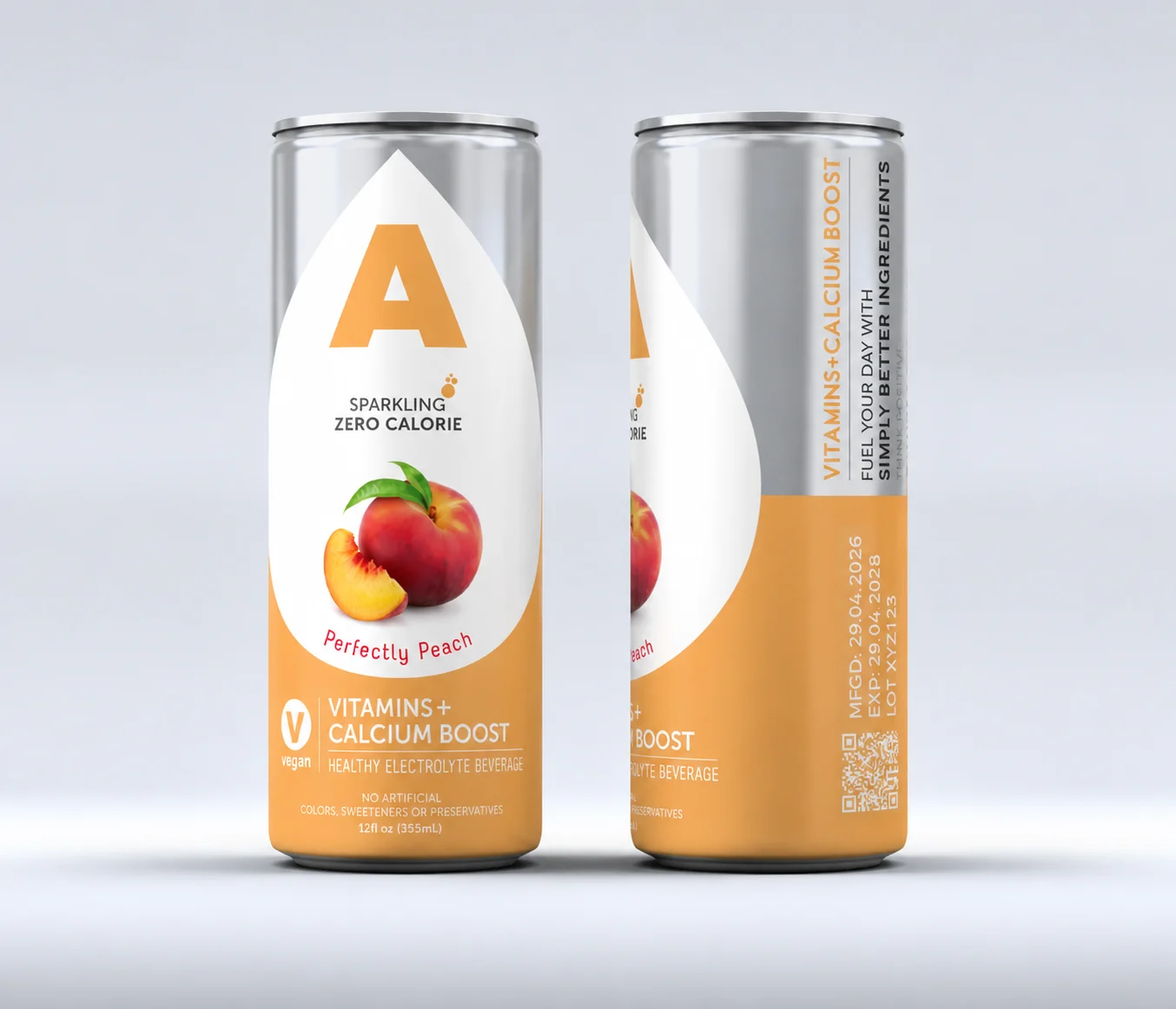
Substrate-agnostic.Works on kraft, coated board, films, cans, glass — by design.
Swiss Ordinance compliant.Food-contact safe — certified for primary food and dairy packaging applications.
Water-based formulation.Low-VOC, low-migration, regulator-friendly — fits modern sustainability briefs.
Drop-in for existing print.Applied during the converter's normal print pass — no new line, no capex shock.
Watch it work

Permanent. Variable. Coded in milliseconds.

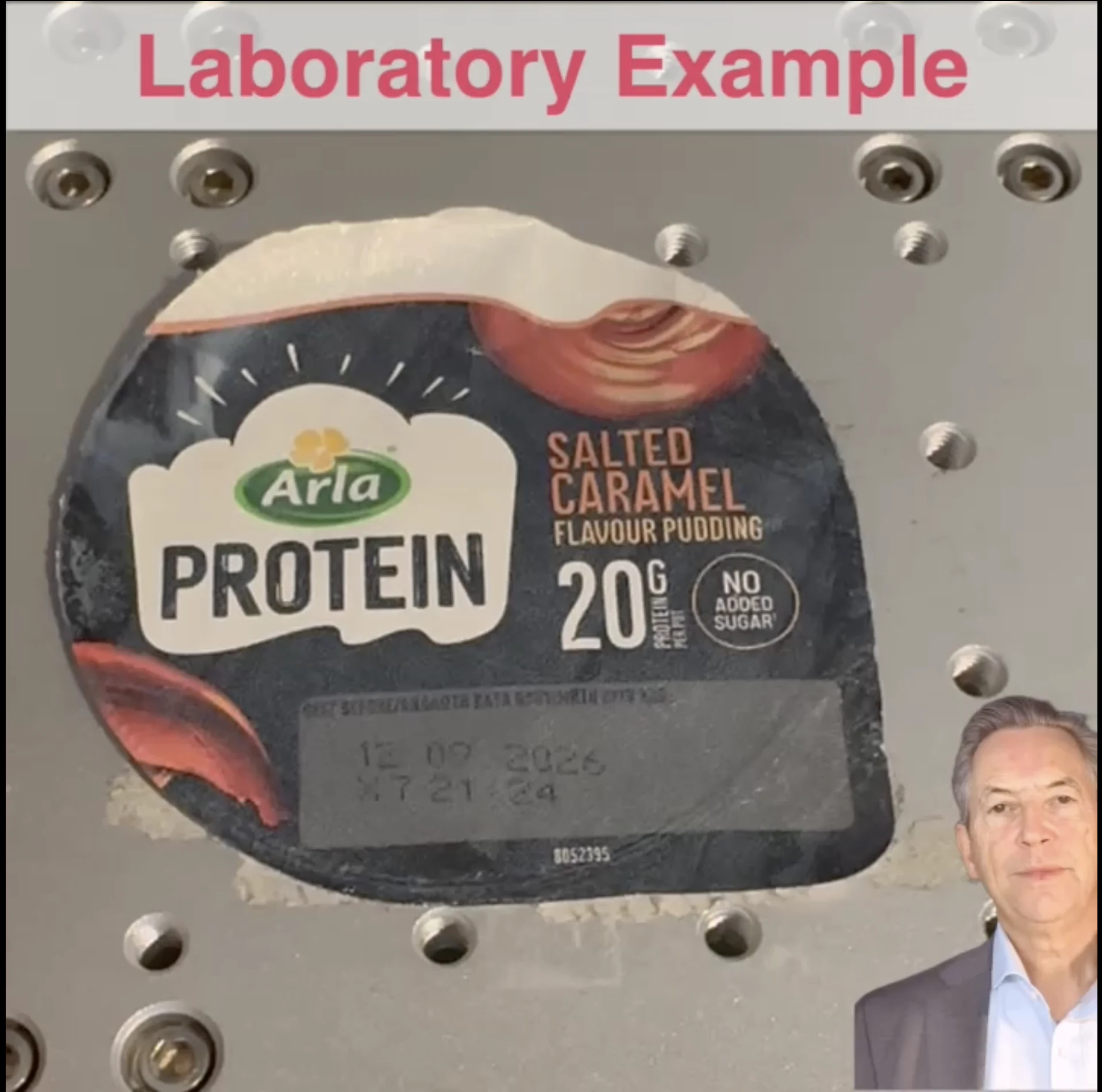
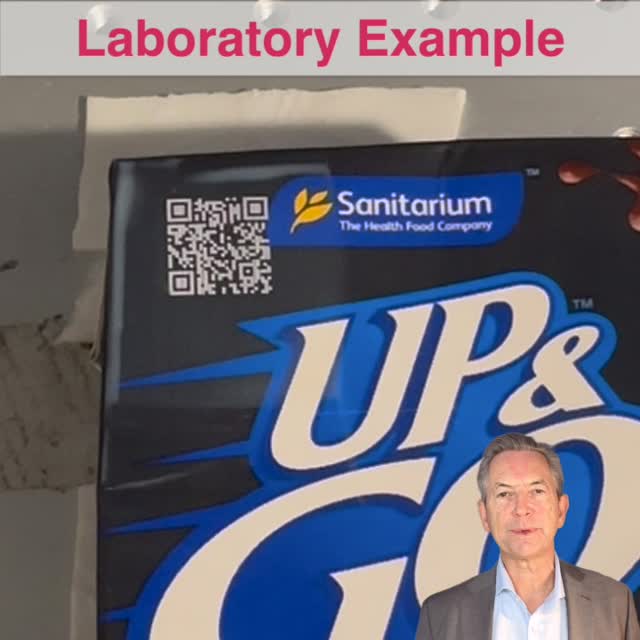
Three real production scenarios — branded packaging, FMCG carton, and unprinted kraft. One primer technology, one laser pass, three different industries solved.

— Branded retail pack
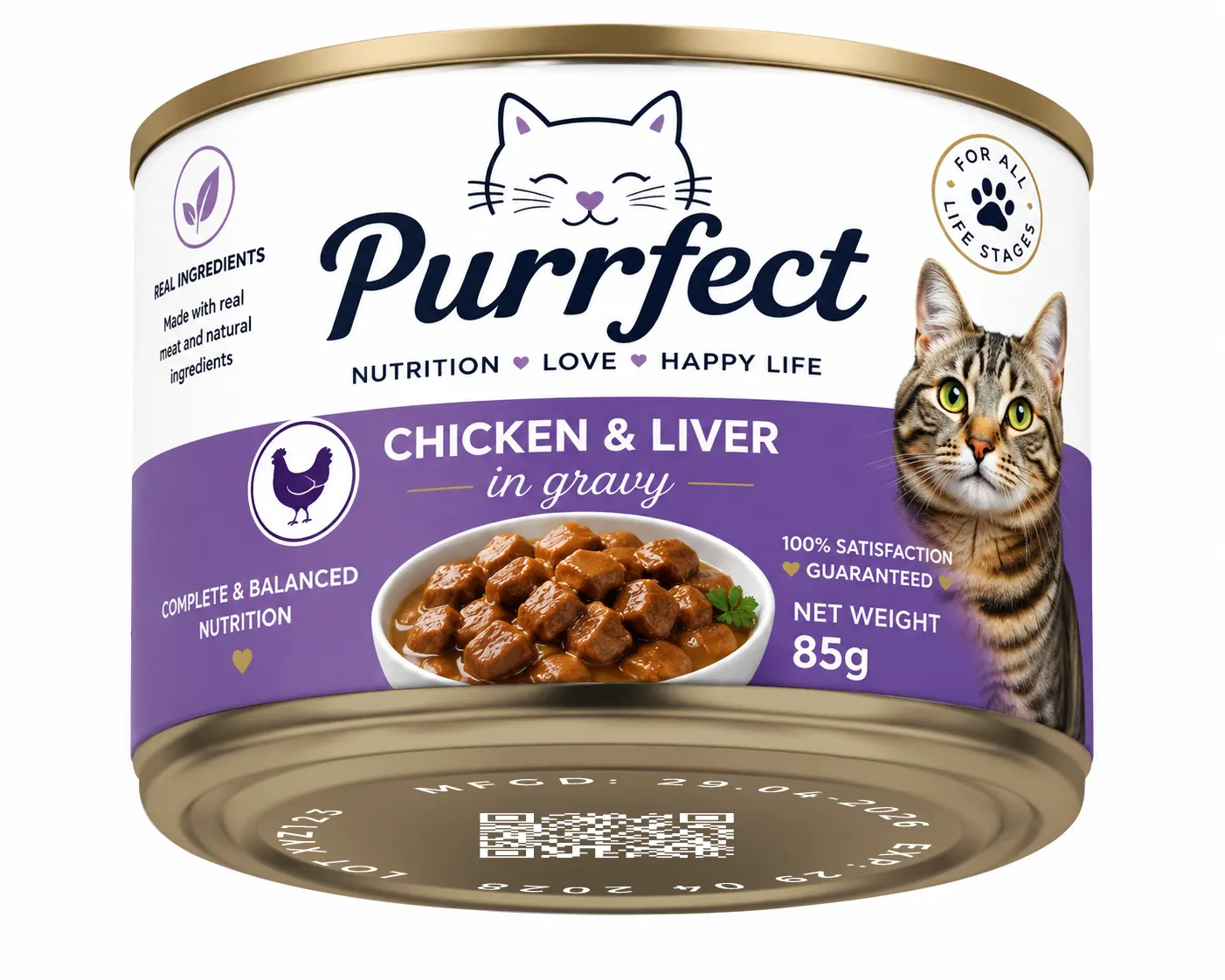
Purina pet food · 16mm QR
16mm GS1 QR · with narration
— FMCG aseptic carton
Sanitarium Up&Go · 11mm QR
Live shopper scan · resolves to GS1 demo
— Unprinted shipping pack
Kraft corrugated · SpOO replacement
Direct on kraft · eliminates SpOO labels
DE+UK+MY

Proven at industrial scale

The TBS laser-reactive primer has been validated in Germany and the UK on flexible substrate, and in Malaysia on metal substrates — all on production equipment at industrial scale, on-line, at full speed. The technology is ready to scale into commercial deployment across plastic films, kraft paper, foils, and metal containers.

Compliance
Swiss Ordinance compliant · food-contact safe
Water-based · low-VOC, low-migration
GS1 Sunrise 2027 · QR-grade contrast
Get In Touch

The brands moving first set the standard.

If you're a brand owner planning your Sunrise 2027 line readiness, a converter looking to add laser-reactive primer to your offering, or a line integrator evaluating coding technology for the transition — we'd value a conversation.